
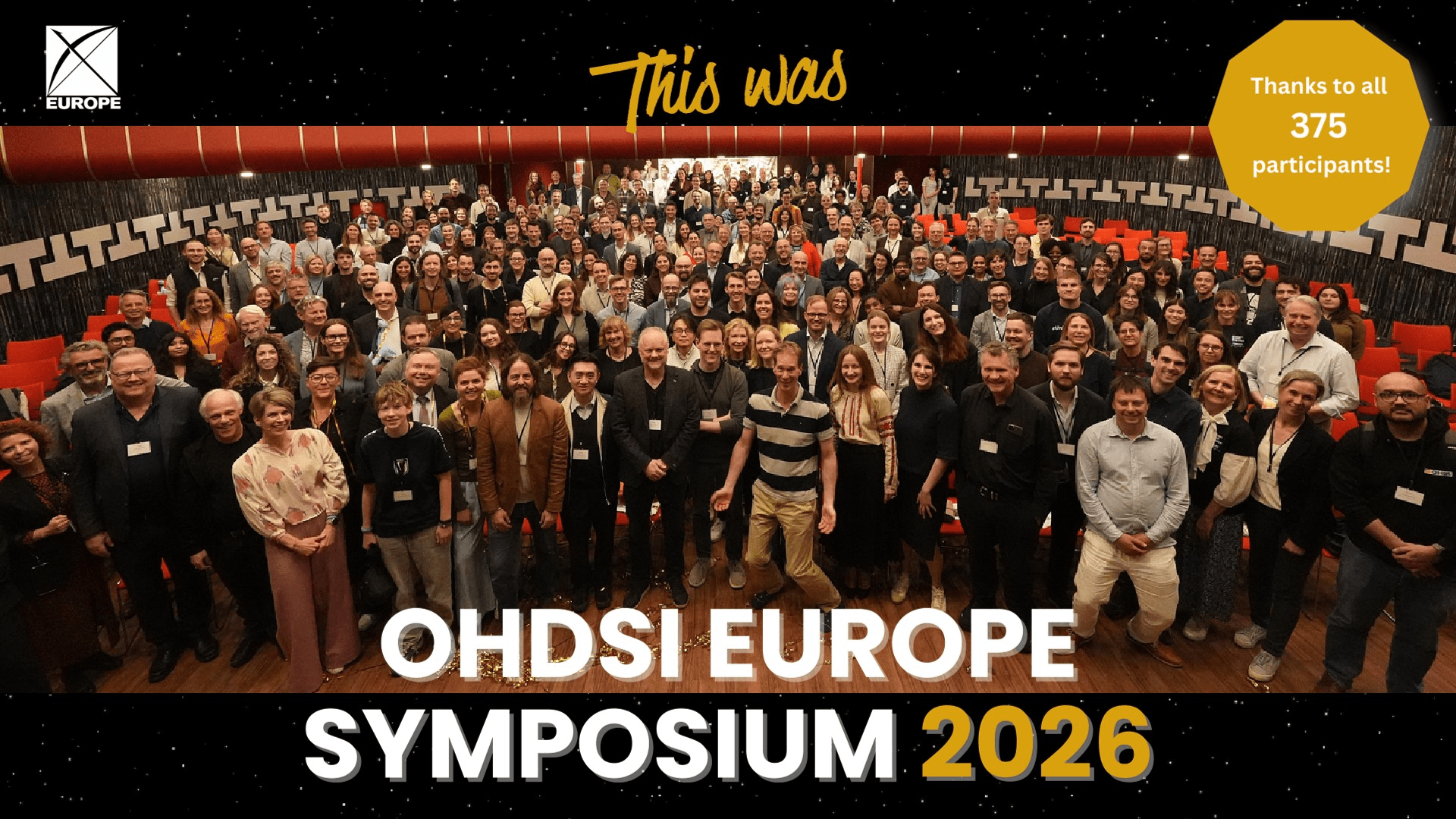
At the beginning of this week, GREG returned to Rotterdam for another international meeting, this time presenting at the OHDSI Europe Symposium 2026.
This event brings together global leaders in health data science, Real-World Evidence (RWE), and open-source collaboration. It was an excellent opportunity to share insights, foster partnerships, and explore innovative approaches to improving patient outcomes.
The EHDEN Foundation team presented the poster titled “Standardising feasibility assessments: a proposal from the GREG project”, which introduces the feasibility assessment (FA) framework currently under development in GREG. This work responds to well recognised gaps and heterogeneity in existing feasibility practices for RWE studies across Europe.
The proposed framework aims to support transparent, reproducible, and structured feasibility assessments by integrating three complementary dimensions: methods, resources, and data. It introduces clearly defined decision points, standard artefacts (providing templates), and an auditable process covering early screening, data landscaping, and dissemination of feasibility results. Development is ongoing and follows an iterative, co‑design approach, with input from academic, industry, regulatory, and HTA stakeholders within the GREG consortium.
The poster also outlines the parallel development of a standardised analytical R package to support the analytical components of feasibility assessments, contributing to reproducibility and consistency in execution.
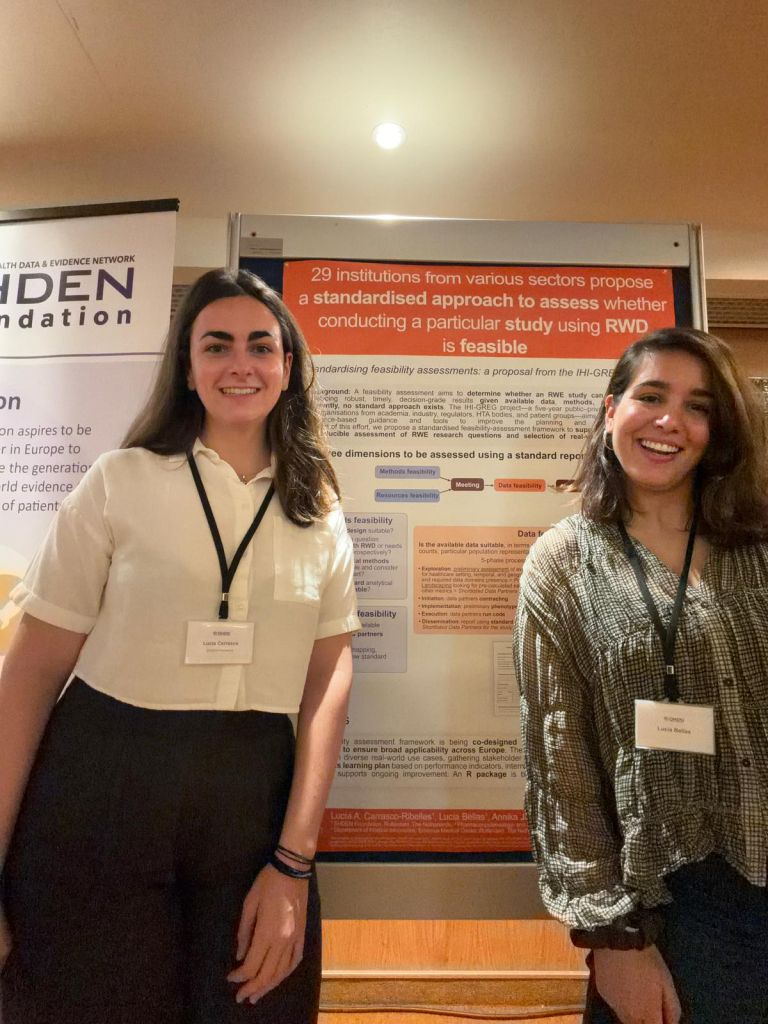
The EHDEN Foundation team and their GREG poster.
This presentation marks an early step for GREG in sharing the project’s methodological work with the wider OHDSI and RWE generation community. A huge thank you to the OHDSI community for the engaging discussions!
Other GREG consortium members were also attending the event, such as colleagues from Erasmus MC, including Prof Daniel Prieto-Alhambra (project coordinator), University of Oxford, SYNAPSE, and Pfizer.
At the Symposium, the major uptake of OMOP Common Data Model was made clear, with a range of projects now using the OMOP CDM, including DARWIN EU, BigData@Heart, HERON, CAPABLE, Digione, Umbrella, CancerWatch, SOPHIA, OPTIMA, FHIN, and many more.
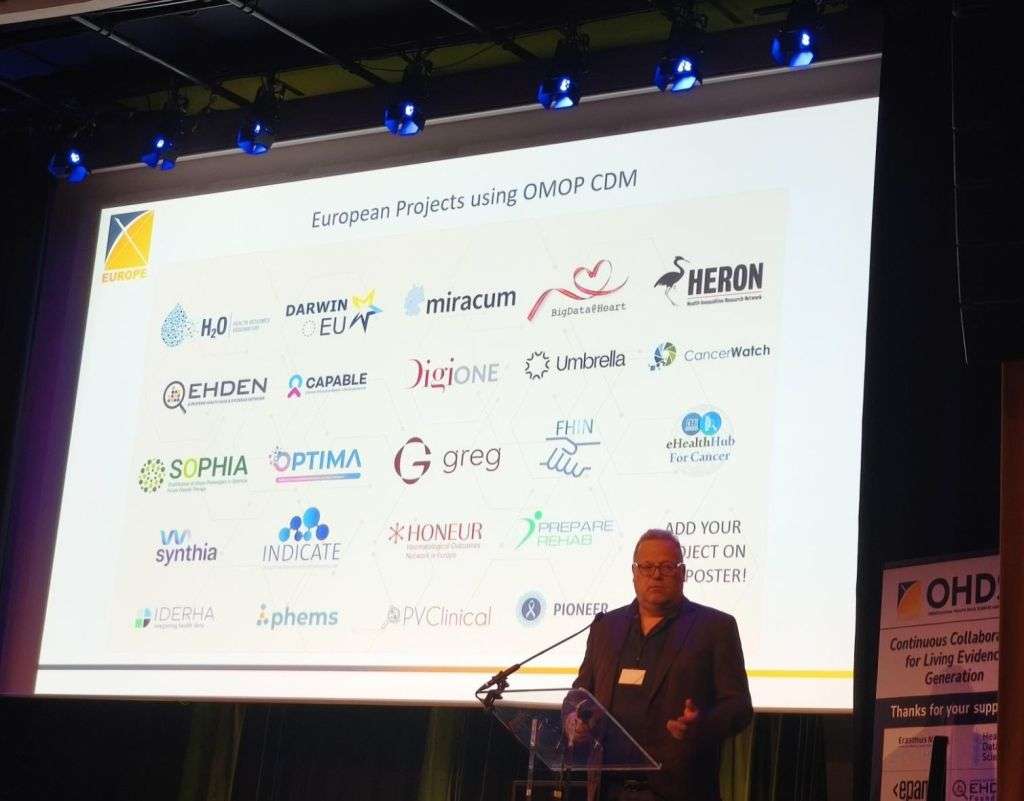
European project adopting OMOP CDM
Stay tuned for more updates—and see how GREG is redefining RWE for regulatory success!


