
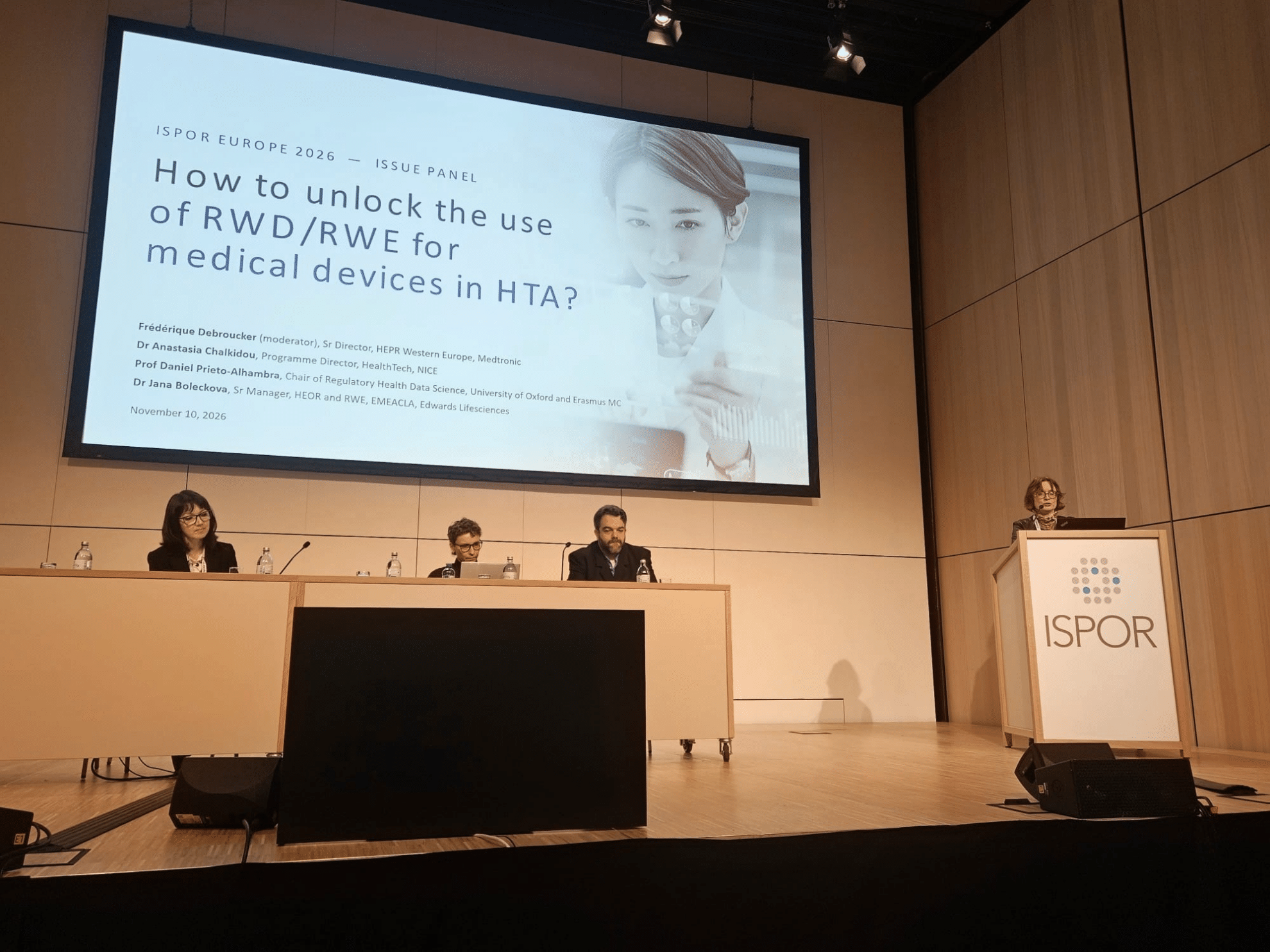
How can Real-World Data (RWD) and Real-World Evidence (RWE) better support the HTA evaluation of medical devices?
This was the central theme of a dedicated panel discussion moderated by GREG consortium members at ISPOR Europe, examinating both current bottlenecks and future opportunities in Health Technology Assessment (HTA).
The conversation focused on exploring three questions:
- What makes RWD fit for purpose?
- How can it support decisions across a device’s lifecycle?
- And what needs to change to strengthen the RWD/ RWE ecosystem?
Current bottlenecks: tackling data gaps and device identification
A recurring theme throughout the session was that the primary hurdle today is rarely a lack of analytical methods: it is whether the available data actually match the question being asked. In routine clinical datasets, an intervention is often recorded without specifying the exact medical device used. Furthermore, connecting short-term registry data with long-term patient outcomes remains complex, particularly as data completeness tends to drop over time. Overcoming these limitations means establishing clear data-quality and relevance criteria working hand-in-hand with key stakeholders such as clinical experts.
New opportunities: AI-supported devices and digital health technologies
Despite these challenges, the panel emphasized the transformative value of RWD when device assessment is approached with an open mind. Real-world data offers valuable insights on how technologies are integrated into everyday care pathways. This perspective is becoming indispensable for AI-supported devices, digital health technologies, and platforms, where relying exclusively on conventional randomised controlled trials is proving increasingly difficult.
A Collective Effort at the heart of GREG
Closing the gap between potential and practice will take more than methods alone. It requires better harmonisation across datasets and a close collaboration between academia, industry, clinicians, and HTA bodies to build practical guidance and training. Thankfully GREG is here to work on these topics!


