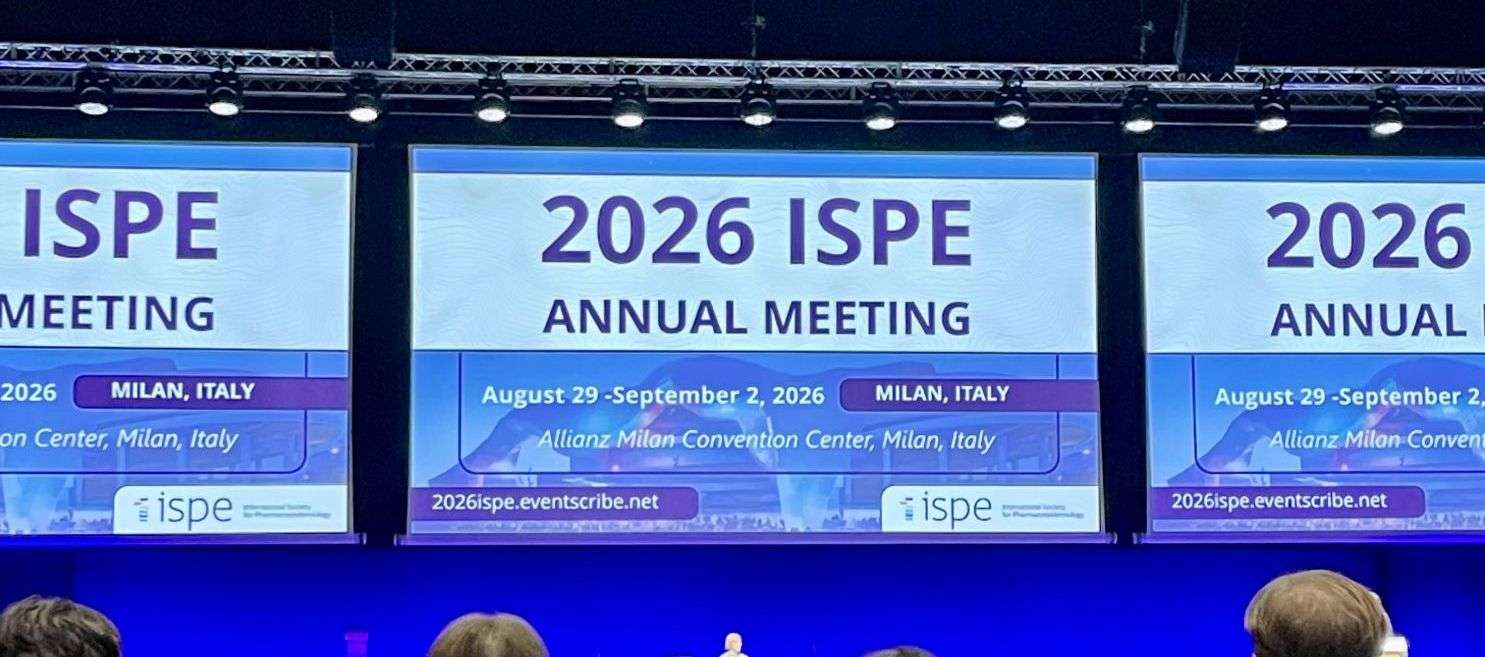
Bringing together researchers, regulators, industry representatives, healthcare professionals, and patient-focused organisations from around the world, the 42nd International Society for Pharmacoepidemiology (ISPE) Annual Meeting provided a unique opportunity to exchange knowledge and discuss the future of pharmacoepidemiology and Real-World Evidence (RWE). Held in Milan, Italy, from 29th of August to 2nd of September, this year’s meeting was centred around the theme of “Unlocking the Power of Pharmacoepidemiology to Improve Patient Health”, highlighting the growing role of high-quality Real-World Data (RWD) and robust evidence generation in healthcare decision-making.
The EHDEN Foundation team, members of the GREG consortium, presented a poster entitled “Standardising feasibility assessments for RWE studies: a proposal from the IHI-GREG project”, showcasing ongoing WP6 work to develop a structured, transparent, and reproducible framework for assessing the feasibility of RWE studies. The proposed approach evaluates feasibility across three complementary dimensions: data, methods, and resources, while incorporating formal decision points and standard artefacts throughout the process to support efficient study planning and evidence-based data source selection.
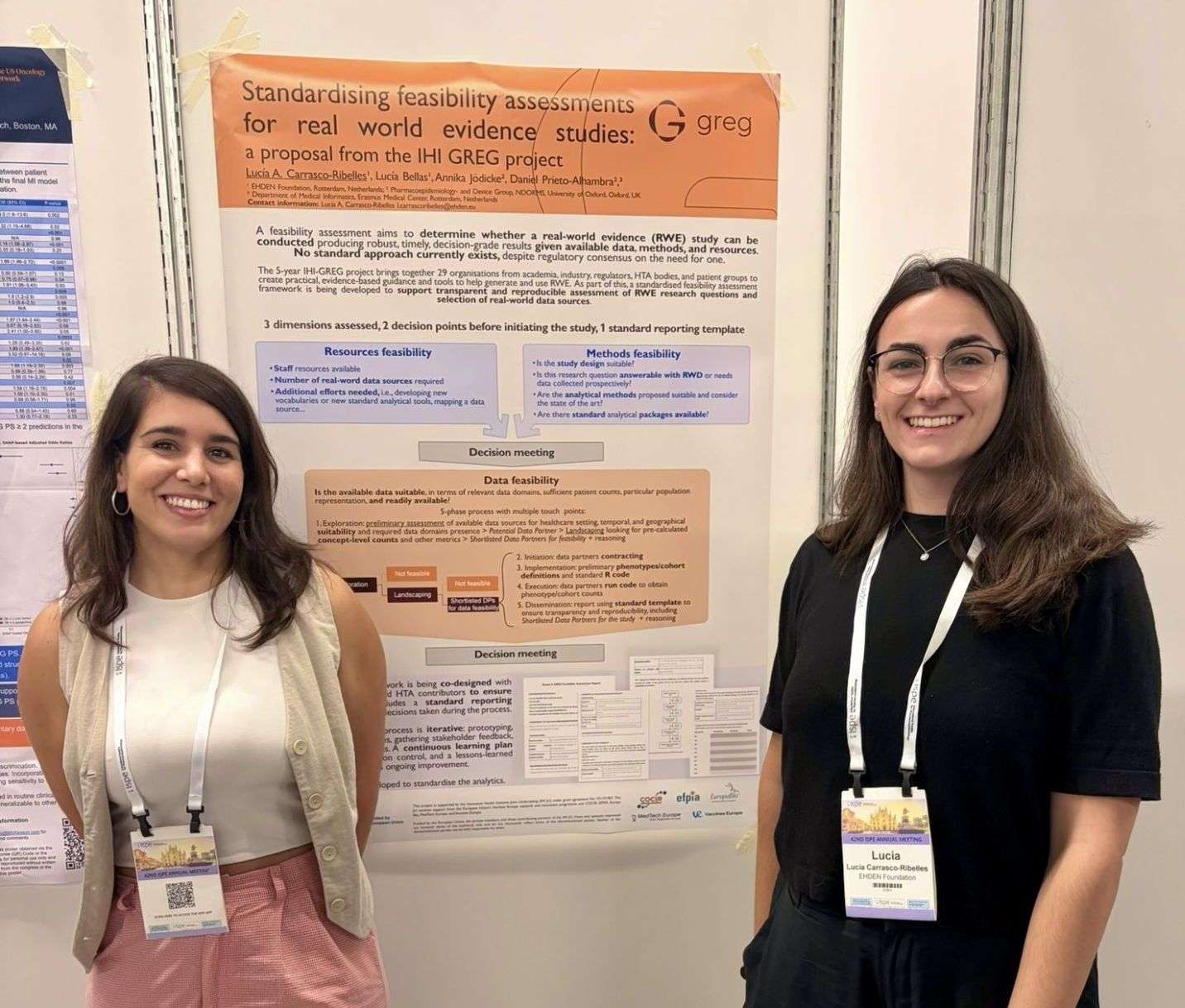
The EHDEN Foundation team and their GREG poster.
A clear theme emerging across the conference was the increasing attention being paid to the quality, reliability, and decision-readiness of RWE. Several presentations, workshops, and poster discussions highlighted the challenges of selecting appropriate data sources, assessing fitness-for-purpose, and ensuring methodological rigour in RWE studies. These conversations reinforced the relevance of GREG’s work, as the need for standardised approaches to study feasibility becomes increasingly recognised across academia, industry, and regulatory settings. We were particularly encouraged by the interest shown in the feasibility assessment topic and by the engaging discussions with fellow researchers and stakeholders.
Participation in ISPE 2026 also provided an excellent opportunity to connect with the broader pharmacoepidemiology community and learn from ongoing methodological developments across a wide range of areas, including regulatory use of RWE, study design, data quality, evidence communication, and emerging analytical approaches. The conference once again demonstrated the value of bringing together diverse stakeholders to address shared challenges and advance patient-centred research.
We would like to thank everyone who visited our poster, shared their insights, and contributed to stimulating discussions throughout the meeting. We look forward to continuing these conversations and exploring future collaborations as we work towards more standardised and robust approaches for feasibility assessment in real-world evidence studies.